Binge-Worthy Box Sets That You Might Have Missed
Nowadays, watching the right television shows seems to be integral to your social standing, and

There’s something deeply satisfying about watching wealthy people implode on television. So much so that it’s created an entire sub-genre. The schadenfreude hits differently when the person losing their mind over a seating arrangement has three holiday homes. These shows understand that money doesn’t solve problems. It just makes them more expensive and infinitely more entertaining to watch.
The genre has exploded over the past few years. If streaming services have revealed anything recently, it’s that audiences can’t get enough of watching the ridiculous antics of the super rich. Being a fly on the wall as cutthroat business deals are made, fortunes are flaunted to excess, and people scheme their way through marriages, friendships, and PR disasters is utterly gripping. Not to mention the schadenfreude of watching them fall from grace.
Here are ten shows that do disgraceful wealth better than anyone else.
Streaming on: Paramount+
Billions spent seven seasons turning high finance into blood sport. Bobby Axelrod and Chuck Rhoades started as mortal enemies and evolved into grudging allies, then enemies again, then something more complicated. The show understood that billionaires don’t play by normal rules. They create new games where they’ve already won.
Damian Lewis and Paul Giamatti anchored the early seasons with performances that made ruthlessness look like strategy. When Lewis departed, the show brought in Corey Stoll as Mike Prince, proving the specific billionaire matters less than the system that creates them. Asia Kate Dillon’s Taylor Mason added dimension to a world that could have been all testosterone and spite.
The series finale managed something rare for a show with this much venom. It felt oddly sentimental in generally the best ways. For a programme with so many double and triple crosses you could shake a stock certificate at, it successfully landed the plane. Or private jet, more accurately. The coalition forged to stop Prince reunited Axe and Chuck, giving viewers the confrontation they’d been building towards since season one. Billions made hedge fund managers into antiheroes, which says something about where television has gone.
Streaming on: NOW TV
Before Succession made wealth toxic, Gossip Girl made it aspirational and terrible simultaneously. The show followed Manhattan’s elite teenagers as they navigated privilege, scandal, and an anonymous blogger determined to expose every secret. Serena van der Woodsen and Blair Waldorf became archetypes. The “XOXO, Gossip Girl” sign-off became a cultural marker.
Blake Lively, Leighton Meester, Penn Badgley, Chace Crawford, and Ed Westwick played characters whose biggest problems involved which parent’s penthouse to stay at and whether their trust fund would clear in time. The show didn’t apologise for the excess. It leaned into it. Every episode felt like watching people who’d never heard the word “no” discover consequences existed.
What makes Gossip Girl endure is how it understood teenage cruelty scales with resources. These weren’t just mean kids. They were mean kids with infinite money and no supervision. The schemes got more elaborate. The revenge plots more theatrical. The fashion more ridiculous. Over 3,000 TV viewers ranked it amongst the best shows about rich people, placing it in the top three alongside Succession and Downton Abbey. That staying power comes from knowing exactly what it was and never pretending otherwise.
Streaming on: NOW TV
Monterey’s wealthy mothers hide darkness beneath their athleisure and charity galas. The show opens with a murder and spends two seasons unravelling who died and why. Reese Witherspoon, Nicole Kidman, Shailene Woodley, Laura Dern, and Zoë Kravitz play women whose perfect lives contain violence, secrets, and the kind of problems money can’t solve.
What makes Big Little Lies work is how it refuses to let wealth be an excuse. These women have resources most people can’t imagine. They still make terrible choices. They still hurt each other. They still end up covering up a death because protecting their world matters more than truth. The show doesn’t glorify their decisions. It just shows what happens when privilege meets desperation.
The Monterey setting becomes a character itself. Ocean views and architectural porn frame domestic violence and psychological abuse. The contrast isn’t subtle, but it doesn’t need to be. Director Jean-Marc Vallée and later Andrea Arnold understand that beautiful surfaces hide ugly truths. The show earned 16 Emmy wins across its two seasons. It proved that prestige television could examine wealth without making it aspirational or turning it into pure satire. Sometimes it’s just documenting what people do when they have everything except honesty.

Streaming on: NOW TV
The Roy family makes dysfunction look like an Olympic sport. Logan Roy’s media empire becomes a battleground where his children compete for approval they’ll never receive and power they’re not equipped to handle. Kendall, Shiv, Roman, and Connor spend four seasons destroying each other whilst pretending they’re building something. The show turned corporate backstabbing into appointment television.
What makes Succession work is how it refuses to let anyone off the hook. These aren’t sympathetic underdogs. They’re catastrophically wealthy people making catastrophically bad decisions. Brian Cox anchors the chaos as Logan, whilst Jeremy Strong, Sarah Snook, Kieran Culkin, and Alan Ruck turn privilege into pathology. The final episode drew 2.93 million viewers, passing the previous series high.
The show created genuine cultural moments. When Tom Wambsgans called a handbag “ludicrously capacious” in season four, the phrase became thousands of memes and TikTok videos. It even catapulted the Burberry tote in question into top online searches. That’s the kind of detail that separates good television from something people actually remember. Succession understood that wealth doesn’t make people interesting. What they do with it does.
Streaming on: Netflix
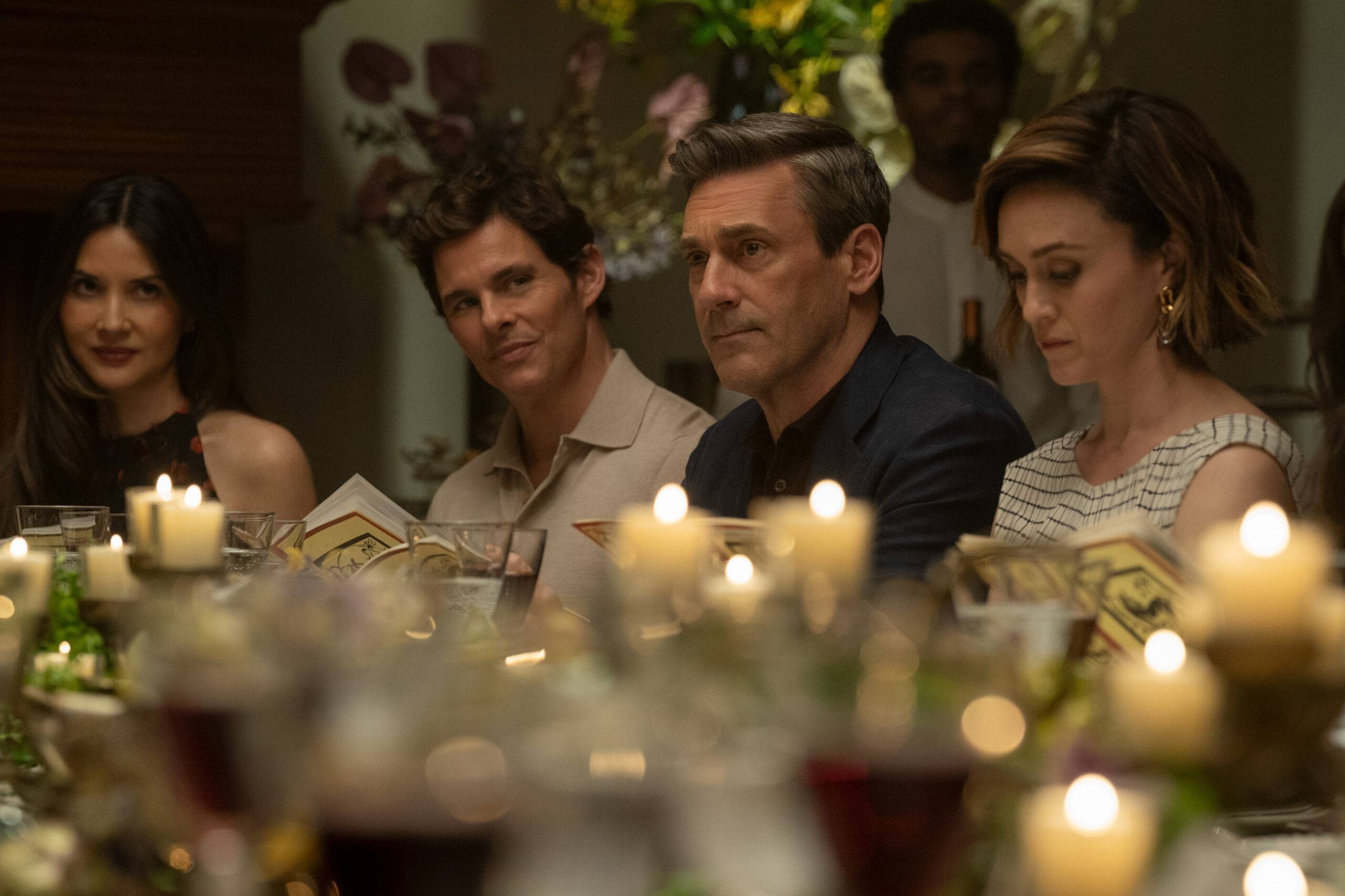
Nicole Kidman returns to wealthy dysfunction as Greer Winbury, matriarch of a renowned family hosting the perfect wedding. Amelia is marrying into this ultra-rich world and has to contend with Greer trying to curate every detail to maintain the family’s flawless image. Which is, of course, entirely a facade.
The show understands that weddings bring out the worst in families, especially when those families have unlimited budgets and reputations to protect. Eve Hewson plays Amelia with the right mix of optimism and growing horror as she realises what she’s marrying into. Liev Schreiber, Dakota Fanning, and Ishaan Khatter round out a cast that knows how to make privilege look suffocating.
What separates The Perfect Couple from standard murder mysteries is how it uses the wedding as a pressure cooker. Everyone’s performing. Everyone’s hiding something. The wealth isn’t just set dressing. It’s the reason these people think they can get away with anything. Kidman has built a career playing women in ostentatious wealthy worlds, from Big Little Lies to Nine Perfect Strangers. She understands how to make money look like a trap rather than freedom. The show proves that even perfect families are performing perfection rather than living it.
Streaming on: ITVX
The Crawley family represents old money watching the world change around them. Downton Abbey spans decades, tracking an aristocratic family and their servants through World War I, the Spanish flu, and the slow death of the British class system. The show made period drama accessible without dumbing it down.
Hugh Bonneville and Elizabeth McGovern anchor the family as Lord and Lady Grantham, trying to preserve a way of life that’s already ending. Maggie Smith’s Dowager Countess delivers withering one-liners that became the show’s signature. Michelle Dockery, Dan Stevens, and Laura Carmichael play the daughters whose futures depend on marriages and inheritance laws that feel increasingly archaic.
What makes Downton Abbey different from other shows on this list is how it examines wealth through obligation rather than excess. These people aren’t spending recklessly. They’re trapped by tradition and duty. The house itself becomes a burden. The servants downstairs often have more agency than the family upstairs. Julian Fellowes created a world where everyone’s stuck in their role, and money doesn’t buy freedom. It just buys a bigger cage with better furniture. The show ran for six seasons and spawned multiple films, proving that audiences will watch wealthy people struggle with relevance as readily as they’ll watch them implode from greed.

Streaming on: NOW TV
Mike White’s anthology series drops wealthy holidaymakers into luxury resorts and watches them unravel. Each season follows a different group of guests whose privilege collides with the staff serving them. The Hawaii season introduced the format. Sicily raised the stakes. Thailand, which premiered in February 2025, continues the pattern of beautiful locations hiding ugly behaviour.
Jennifer Coolidge became a phenomenon as Tanya McQuoid, the lonely heiress whose desperation for connection drives much of the first two seasons. Murray Bartlett, Aubrey Plaza, Theo James, and Meghann Fahy round out an ensemble that understands how to make wealth look simultaneously aspirational and repulsive. The show earned 23 Emmy nominations for its latest instalment.
What separates The White Lotus from standard resort drama is how it examines power dynamics without preaching. The guests aren’t cartoonishly evil. They’re just insulated enough from consequences that they forget other people exist. The staff aren’t saints either. Everyone’s compromised. Everyone’s performing. The third season holds an 86% rating on Rotten Tomatoes with an average score of 7.7 out of 10 across 181 reviews. White knows that paradise becomes hell when you’re stuck there with people who can’t see past themselves.
Streaming on: Apple TV+
Jon Hamm plays a hedge fund manager whose life collapses after divorce and job loss. Rather than adjust his lifestyle, he resorts to stealing from friends in his affluent neighbourhood to maintain his position amongst the one percent. The show examines what happens when someone built their entire identity on wealth and suddenly can’t afford the performance.
Hamm told CNN there’s clearly a moment on television of rich people behaving badly. He pointed to The White Lotus, Big Little Lies, and The Perfect Couple as examples. Your Friends & Neighbors adds to that catalogue by asking what someone will do to avoid admitting they’ve fallen. The answer involves increasingly desperate and criminal choices that make viewers uncomfortable in the right ways.
What separates this from other wealthy-people-in-crisis shows is how it focuses on the fall rather than the height. These aren’t people born into money learning consequences. This is someone who climbed the ladder, discovering how far down it goes. Hamm brings the same intensity he showed in Mad Men, but here it’s pointed at self-preservation rather than self-destruction. The show understands that for some people, losing status feels worse than losing morality. That’s not a defence. It’s just an observation about what wealth does to identity when the two become inseparable.
Streaming on: Netflix
The original and best, reinvented for a new generation… The Carrington family made wealth look like warfare. The reboot of the 1980s soap opera brought the same energy to a new generation, following a family whose oil fortune funds endless schemes, betrayals, and power plays. Fallon Carrington became the breakout character, a ruthless businesswoman whose ambition matched her father’s.
Elizabeth Gillies plays Fallon with the kind of confidence that only comes from never hearing “no” growing up. Grant Show and Nathalie Kelley anchor the early seasons as Blake Carrington and Cristal, though the show cycled through multiple actresses in the Cristal role, which became its own running joke. The cast understood they were making a soap opera and leaned into the melodrama.
Dynasty doesn’t pretend to be prestige television. It’s camp and excess and plot twists that defy logic. But it understands something important about wealth on screen. Sometimes you don’t want nuance. Sometimes you want to watch people in evening gowns throw champagne at each other whilst their company stock crashes. The show ran for five seasons, proving there’s still room for old-fashioned soap opera about rich people destroying each other, as long as everyone’s in on the joke. The original series defined an era. The reboot reminded viewers why that formula worked in the first place.
Streaming on: Netflix
The Bluth family lost their fortune and spent five seasons proving they never deserved it in the first place. Michael Bluth tries to be the responsible one whilst his family commits fraud, evades taxes, and generally demonstrates that wealth doesn’t require intelligence or competence. Just inheritance and a willingness to ignore consequences.
Jason Bateman plays Michael as the straight man in a family of narcissists and idiots. Jeffrey Tambor, Jessica Walter, Will Arnett, Portia de Rossi, and Tony Hale create characters so self-absorbed they become parodies of wealthy dysfunction. The show pioneered the kind of dense, reference-heavy comedy that rewards repeated viewing.
What makes Arrested Development essential viewing is how it dismantles the myth that rich people are rich for a reason. The Bluths are catastrophically incompetent. They fail upwards through connections and luck rather than skill. The frozen banana stand becomes a metaphor for the entire family. There’s always money in it, but nobody knows why or how to access it properly. The show influenced everything that came after, proving that wealth could be funny without being aspirational. Sometimes the best way to examine privilege is to watch people who have it demonstrate they shouldn’t. That’s not commentary. That’s just documentation.
Nowadays, watching the right television shows seems to be integral to your social standing, and

On any given evening in Britain, thousands of voices will be rising in harmony. filling
It’s a raw, rainy afternoon, but Jessica Fostekew quickly blows away any cobwebs with her