
Who is killing our high streets?
I’ve walked past at least ten newly-empty shops this week. Not boarded up. Not “closing
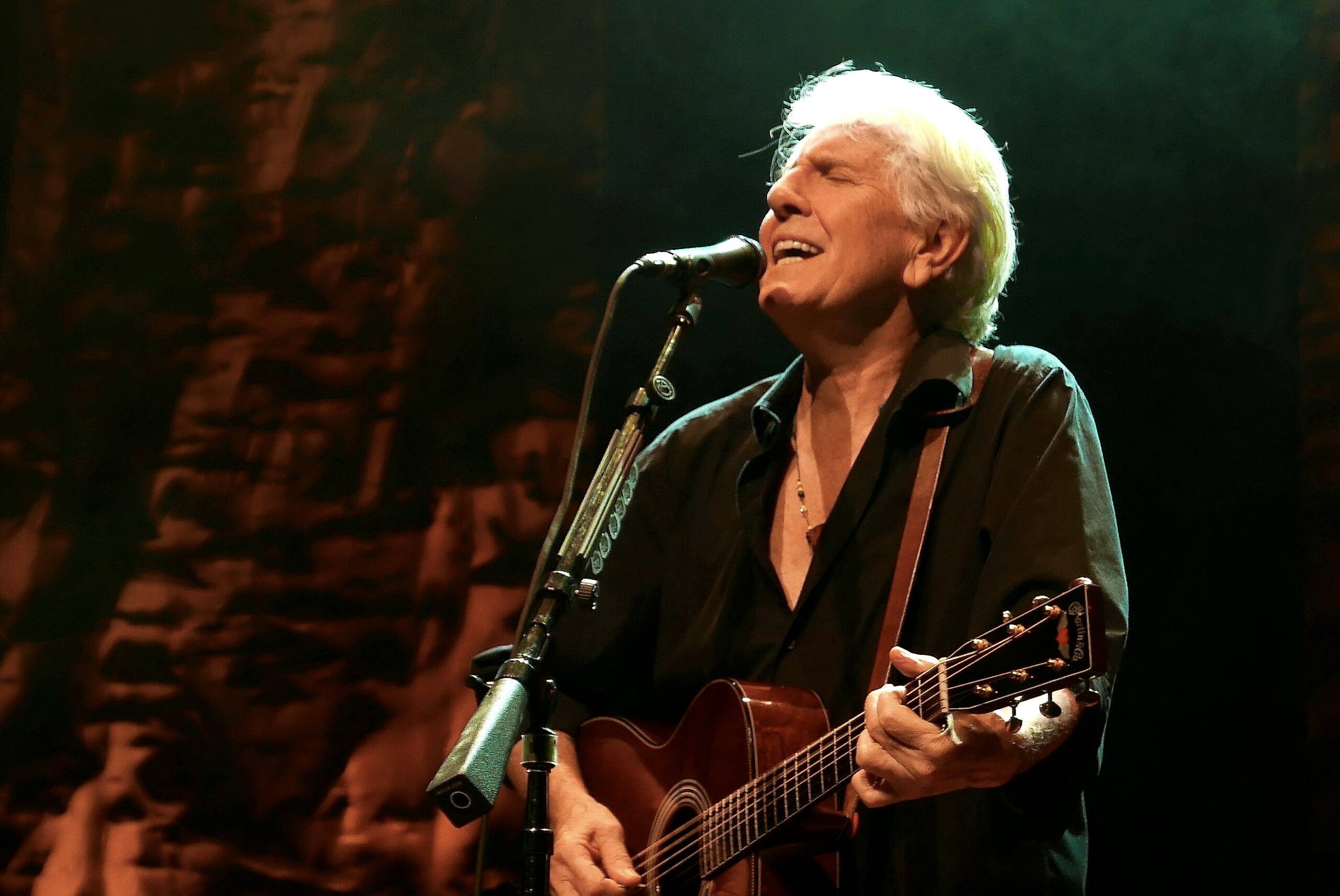
“Music can still change the world – even if it’s just one mind at a time.” Graham Nash talks about his illustrious career and tour
It’s a blistering afternoon in Manhattan, and Graham Nash OBE admits he’s feeling the heat. “It’s 100 degrees today, not so fabulous,” he says, with a faintly nervous chuckle. After years at the centre of the sun-kissed Californian hippy scene, you’d think he’d be used to the heat.
Yet, despite the sweltering weather, Nash’s energy is undimmed. At 83, the legendary singer-songwriter is preparing for a return to UK stages, with a string of live dates which include shows at Hastings’s White Rock Theatre and the London Palladium this October. For Nash, it’s not just another tour – it’s a homecoming with the final show providing an opportunity to revisit the capital and a venue which played a huge part in his career.
“I’m really looking forward to the Palladium,” Nash says. “What a great place to play. Not only that, but it was the very last show I played with The Hollies.” Appearing alongside him is Peter Asher, the producer and musician whose fingerprints are all over the evolution of British pop and rock. Nash says these evenings will be as much about stories as about the songs.
Nash has been at the heart of popular music’s most transformative moments. From the British beat movement in the 1960s with The Hollies, to the folk-rock revolution of Crosby, Stills & Nash (and Later, Young), his voice and vision helped define a generation. And this is what the Graham Nash – More Evenings Of Songs & Stories shows will be celebrating.
“People who love music, but don’t write music, are sometimes mystified as to where these songs came from,” he muses. “I must confess that I’m a little mystified myself! And I’ve been doing it for over 60 years now…” He tells me, at least for him, the creative process is as much about curiosity as it is craft. Throughout his life there have been seemingly ordinary moments, where he’s seen or read something that demands to be turned into a song. So, these new shows see him revealing where his head was while writing Marrakech Express, Military Madness or Immigration Man. He suggests the shows are as much about memory as melody. “It’s always about how it makes you feel,” he says. “It’s magical in that way.”
Nash co-founded The Hollies in the early 1960s, guiding them to become one of Britain’s most successful bands. With a dynamic blend of pop and rock, they mixed lush three-part vocal harmonies with the catchy melodies of Merseybeat and the rhythmic power of rhythm and blues. Early hits included Just One Look and Bus Stop, as this powerhouse captured the imagination of a teenage audience eager for the emerging British sound.
Nash left in 1968, before The Hollies even began enjoying the peak of their success. An American tour had inspired him to relocate to the flourishing West Coast in search of a new sound and further challenges. California was then a place of vibrant change, marked by the rise of new cultural movements, music, and political activism. Teaming up with David Crosby from The Byrds and Buffalo Springfield’s Stephen Stills, the trio started creating a soundtrack to the colourful scene and youthful spirit. This was a time of freedom, love, and social consciousness. Young people were beginning to reject the conservative status quo, questioning inequality, corruption, and colonialism.
To fully appreciate Nash’s place in music history, we need to understand the era that shaped him. The 60s were a time of seismic social and political upheaval. The civil rights movement, the Vietnam War, the counterculture revolution were all rocking the world, and music was at the heart of it. For Nash, who had grown up in the industrial north of England, the explosion of creativity and activism was both liberating and inspiring.
“When I first came to America, it was like landing on another planet,” Nash recalls. “The energy, the sense that anything was possible – it was intoxicating.” The move from The Hollies to Crosby, Stills & Nash was more than a change of bands; it was a leap into a new way of thinking about music and its role in society. “We weren’t just making records,” Nash says. “We were trying to say something, to be part of something bigger.”
With its thoughtful lyrics and beguiling harmonies, Crosby, Stills, and Nash’s output became the rallying cry for a generation of American youngsters. Their arrangements were lush and intricate, but their worldview was unflinching. Ohio, written in response to the Kent State shootings, captured the anger and grief of a nation. “That was written and recorded in a matter of days,” Nash remembers. “We felt we had to respond… to bear witness.” The song was banned on some radio stations, but it became an anthem of protest, a reminder of music’s power to confront and quantify injustice.
Nash’s activism has always been deeply personal. “I’ve never seen a separation between my music and my beliefs. If you have a platform, you have a responsibility to use it.” Over the years, Nash has lent his voice to numerous causes, from anti-nuclear campaigns and environmental activism to human rights. He has marched, organised, and spoken out.
In the 1970s, Nash and his bandmates were amongst the organisers of the No Nukes concerts, bringing together artists like Bruce Springsteen, Jackson Browne, and Bonnie Raitt to protest the rapid expansion of nuclear plants. While the shows raised awareness and funds, the experience also demonstrated the raw power of collective action. “It was about more than music,” Nash says. “It was about community, about standing up for what you believe in.”
His commitment to activism has never wavered, even as the world has changed, almost beyond recognition. “The issues are different, but the need for action is the same,” he says. “Whether it’s climate change, racial justice, or the threat to democracy, we can’t afford to be silent.”
Whole Nash’s music is composed around feelings; it also seems to encourage deeper thinking about the world. The world has evolved almost beyond recognition in the last six decades, but Nash’s political edge remains as sharp as ever. “In the 60s and early 70s, we thought Richard Nixon was crazy. Now we’re facing a man who has been elected twice, but is completely chaotic. It’s obvious he wants to destroy democracy. It’s also obvious that he wants a third term, regardless of what our Constitution says. We’re going to have a hard time getting rid of this man.”
Nash has seen many characters with an attitude like Donald Trump, and all have left deep scars on the American psyche. “When I wrote Stars and Stripes and Golden Idols, I was particularly talking about Republicans, and the way people like Donald Trump have destroyed the truth with their alternative facts.”
Populism and nationalism aren’t just confined to the US, he says. “I go around the world and see the rise of the right wing, and it is incredibly scary – particularly the guy in charge of Hungary right now. They’re just autocrats, and that seems to be the direction Trump wants to move in.”
I asked him if music retains the potential to win hearts and minds. “I believe that music can change the world, even if you change only one mind – maybe it’s the right mind. Music is magic. It can certainly help people think better and maybe even shake their backsides to it.”
With a career spanning more than half a century, he has no shortage of material to plough into Graham Nash – More Evenings Of Songs & Stories. “I know that people want to hear certain songs, like Teach Your Children, Our House, Military Madness, and Immigration Man,” he says. “And they form a skeleton for the show. In between all that… Well, I can do what I want to do.” For Nash, the setlist is both a tribute to a formidable legacy and a canvas for some new creations. “The audience can expect to hear a song that I finished yesterday morning. The other day, I wanted to do a song I’d just written called The Sleep Song, and the people I’m playing with said, ‘Okay, let’s do it.’ I asked if we should maybe rehearse it first, but they go, ‘No, we can do it.’ And it was such a beautiful performance,” he says with a small laugh of disbelief over his backing band’s raw talent.
The trust in the musicians he’s assembled is absolute. “It gives me great freedom to go where I want, and that is an immense pleasure for a musician.” The lineup is as versatile as it is talented: “I have Adam Minkoff on acoustic and electric guitar, and at one point in a couple of songs, he plays bass and drums, and sings at the same time. I have Zach Djanikian also on acoustic guitar and electric guitar, mandolin and drums and tenor sax, and my friend Todd Caldwell, who I’ve made music with for the last 15 years, on all keyboards.”
This musical camaraderie allows for moments of spontaneity and experimentation. “There’s a tendency to try and jam out and be a bit more experimental sometimes, because I feel that freedom,” Nash admits. “It’s brilliant.”
This upcoming concert experience is about more than nostalgia or even artistry – it’s about offering a rare moment of respite; a place of joy and comfort. “If I want people to say anything about coming to a Graham Nash concert, it’s that there’s at least a couple of hours of peace. In today’s world, with the headlines screaming at us and wars breaking out all over the place – particularly between Russia and Ukraine and the genocide going on in Gaza, I think a couple of hours of peace is well needed.”
Nash’s career has spanned the analogue and digital eras, and has witnessed firsthand the rapid advances in music technology. “My journey started with auditioning at Abbey Road on two tracks. Now, I have an iPhone with multiple tracks on it. It’s been incredible, the progress of music, but I still maintain that you have to have a good song to start with. No computer in the world can make a bad song into a good song.”
He’s sceptical of the creative potential of artificial intelligence. “AI is very good at ripping off other things, but it’s not very good at having a basic emotion or a basic idea to work from.” But Nash acknowledges the rapid pace of change. “The way AI is going, it’ll only be a couple of years before we have Artificial General Intelligence, which will mimic human emotions. We can’t get the toothpaste back into the tube.”
Beyond music, Graham Nash has long been a passionate collector and creator in the world of photography. “I have the very first photograph produced by Daguerre in 1836. I’ve been collecting daguerreotypes for the last 15 years.” The daguerreotype, a painstaking process that produces hauntingly beautiful images on silvered copper plates, represents for Nash a tangible link to the origins of visual storytelling.
His involvement with the form doesn’t end with collecting. He was an early pioneer in digital printing, founding Nash Editions in 1989. “My first printer is in the Smithsonian Museum of American History. Still today, that’s a high-quality dot matrix printer.” He laughs, “Unfortunately, I was one of the people who started all that.” The dual passions for music and photography seem always intertwined, each informing the other. Both, he believes, are about capturing moments, whether with melody or light. The passion for photography is more than a hobby; it’s another way of seeing, another way of telling stories. “Photography and music are both about capturing moments,” Nash says. “A song, a picture – they’re both ways of holding on to something, of making sense of the world.”
As the conversation turns to the past, Nash’s tone noticeably softens. The loss of his longtime friend and collaborator, David Crosby, still weighs heavily. “When David passed, it was terrible for us all, especially his wife and son. The heartbeat of our band had disappeared. Should Stephen, Neil (Young) and I ever even talk about playing music together, we’ll all be missing David, including the audience. For that very reason, I don’t believe that we will ever play together again.”
It’s a poignant admission, and one that speaks to the deep bonds and inevitable changes that come with a long life in music. “Sometimes, things can never be the same. No matter how much the fans might want that.” One of the keys to Nash’s longevity has been his willingness to evolve. From the British Invasion of America to photography’s digital age, he’s embraced change without losing sight of his core values. “You have to keep learning, keep growing,” he says. “The world doesn’t stand still, and neither can you.”
Staying relevant in a rapidly changing world is no small feat, but Nash has managed it with grace and integrity. He is acutely aware of the challenges facing artists today: the pressures of social media, the fragmentation of audiences, and the commodification of creativity. “It’s harder than ever to break through the noise,” he says. “But the need for real, honest art is as great as it’s ever been.”
Nash is optimistic about the future, but he is also realistic. “There’s a lot of great music being made, but there’s also a lot of distraction, a lot of noise. You have to find your own voice, your own truth. That’s what people respond to.”
At the heart of his work is a simple, powerful philosophy: connection. Whether through music, photography, or activism, he is driven by a desire to connect – with his audience, with his collaborators, with the world. “We’re all in this together,” he says. “Music is a way of reminding ourselves of that, of breaking down the barriers that divide us.” This sense of connection is evident in his live shows, where stories and songs intertwine, creating a shared experience that transcends time and place. “I want people to leave feeling uplifted, inspired, maybe even changed,” Nash says. “If I can do that, even for one person, it’s worth it.”
As Nash prepares for this upcoming tour, he is reflective but not nostalgic. “I’m proud of what I’ve done, but I’m not done yet,” he says. “There are still songs to write, stories to tell, causes to fight for.” At 83, he remains a restless spirit, always searching, always striving. In a world that often feels divided and uncertain, both Nash’s music and core message offer a rare sense of hope and possibility. His journey, from Salford to Woodstock and then the digital frontier, is a testament to the power of art to inspire, challenge, and connect. “But we’re all just creating it out of thin air,” he says, still marvelling at the mystery of how all this came to be. “There are only about 12 notes in the Western scale. Can you imagine all the songs that have been written with those 12 notes? That really is magic.”
Graham Nash presents Graham Nash – More Evenings Of Songs & Stories at the White Rock Theatre in Hastings on Sat 18 Oct and the London Palladium on Sun 19 Oct, as part of a nationwide tour.
www.whiterocktheatre.org.uk
www.lwtheatres.co.uk/theatres/the-london-palladium
I’ve walked past at least ten newly-empty shops this week. Not boarded up. Not “closing

BBC Three’s hit comedy, Things You Should Have Done, returns for a new season on

I’ve been staring at runway shows, scrolling through fashion forecasts, and frankly, I’m delighted to