
The Sports That Are Reshaping Our Shared Spaces
Across Britain and Europe, the sports people actually play differ significantly from what we’re watching

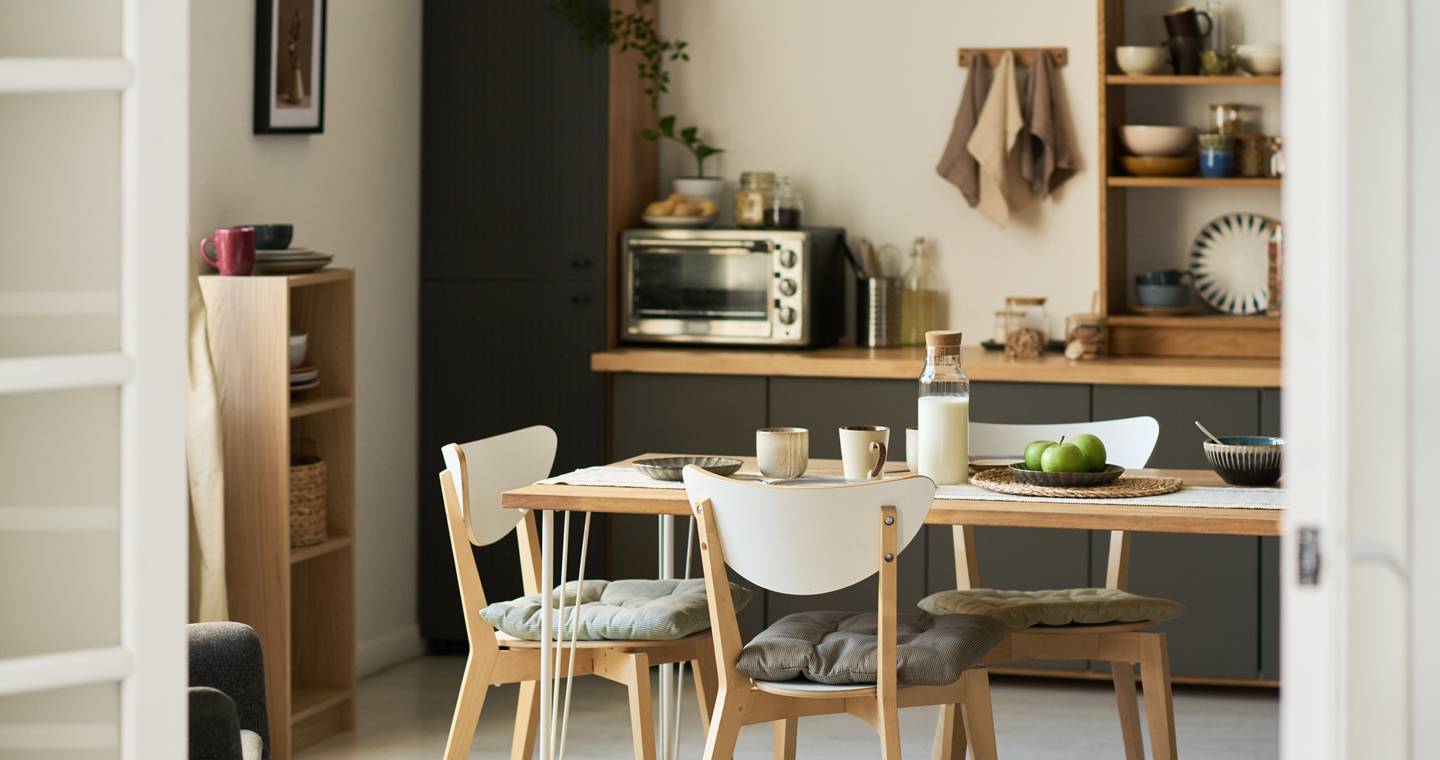
Something is starting to shift in the way we think about interior design. Thankfully, those Instagram-perfect spaces are losing their grip. The overly styled rooms that might photograph beautifully but ultimately feel hollow when you walk into them are being replaced by something more authentic. And comfortable. Hurrah for some common sense (finally).
Best still, what’s coming this year isn’t about following a rulebook. It’s about creating spaces that hold you, support you, and reflect the life you actually live.
Here are a few trends that will shape how we design our homes this year.
The most memorable interiors in 2026 won’t be the ones that make you gasp when you walk in.
They’ll be the ones where you naturally want to stay longer.
Industry figures are predicting a shift from interiors designed to deliver a ‘wow’ effect to spaces that hold and support human time. This represents a move towards curated calm over superficial opulence.
What this means for your home: Stop chasing drama. Start building rooms that feel like they’re holding space for you.
A linen throw, a wool rug, a ceramic vase. These elements create depth without demanding attention.
The goal is simple. When someone enters your space, they should feel their shoulders drop.
After years of milky blues and cottage-inspired greens, we’re ready for something with more complexity.
WGSN, an international trend forecasting company, named Transformative Teal the colour of the year for 2026.
This isn’t your safe, neutral blue-green. It’s dramatic. It combines both blue and green in a single sophisticated hue that works in ways neither colour could achieve alone.
You can use teal as an accent wall, through soft furnishings, or as a bold choice for cabinetry.
It pairs beautifully with warm woods, brass fixtures, and natural stone.
The beauty of teal is its versatility. In bright light, it leans fresh and energising. In evening light, it becomes moody and enveloping.
If you’ve been playing it safe with neutrals, this is your permission to go deeper.
Teal isn’t the only rich colour making waves.
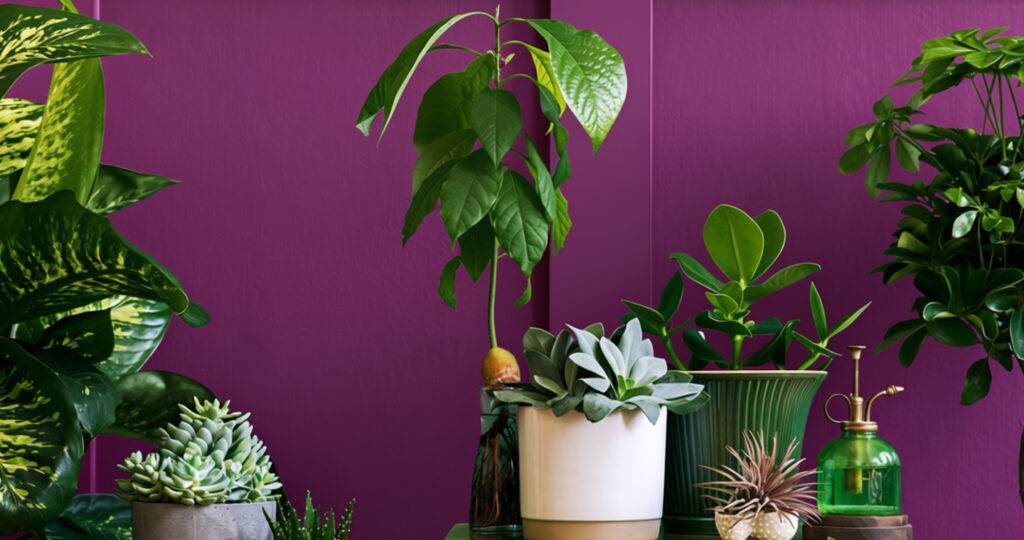
Little Greene’s Creative Director Ruth Mottershead describes their 2026 Colour of the Year, Adventurer (a regal plum aubergine – obviously!), as a natural progression towards burgundy and deeper jewel tones.
People are demonstrating more colour confidence in their homes. The shift is both regal and reassuring.
Jewel tones work because they add depth without feeling overwhelming. A deep emerald in a dining room. A sapphire blue in a bedroom. A ruby red in a powder room.
These colours create intimacy. They make large rooms feel more embracing and small rooms feel more intentional.
The trick is commitment. Half-hearted jewel tones look muddy. Fully saturated jewel tones look luxurious.
Designers are seeing the end of overly themed spaces and designs created purely for social media.
Nashville designer Brad Ramsey puts it plainly: “If a room is designed solely to photograph well, it usually doesn’t hold up in real life.”
The shift is towards deeply personal and layered spaces that reflect the people who actually live in them.
This means your home can finally look like your life. Books you’re actually reading. Art that means something to you. Furniture arranged for conversation, not for the camera angle.
We’ve noticed the homes that feel most alive are the ones with evidence of being lived in. A stack of magazines. A half-finished puzzle. Shoes by the door.
Your home isn’t a showroom. It’s where your life happens.
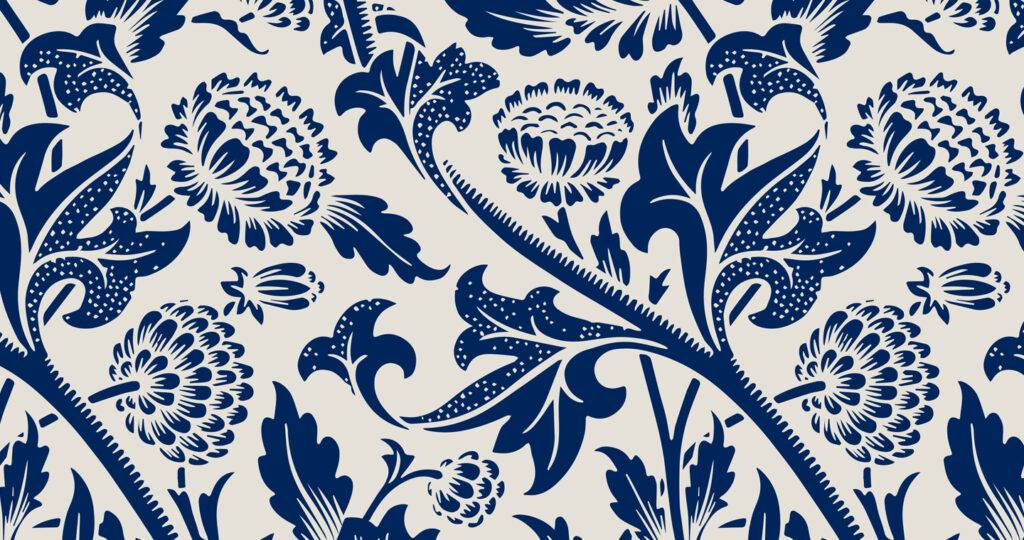
In 2026, it’s all about the tapestry print.
Richly patterned and inspired by vintage textiles, this pattern trend feels worlds away from the flat, minimalist, quiet luxury prints we’ve been seeing. Instead, it offers a layered look that instantly adds character.
Tapestry prints work beautifully on upholstery, cushions, and curtains.
They bring warmth and history into contemporary spaces without feeling costume-like.
Look for patterns that combine florals, foliage, and geometric elements. The complexity is the point. These prints reward closer inspection.
You can find modern interpretations from brands like Morris & Co and GP & J Baker, who’ve been mastering this aesthetic for over a century.
Lighting is becoming easier to personalise without the commitment of wiring or installation.
Rechargeable lamps eliminate the need for ugly cords. Rechargeable bulbs slot into standard wall light fittings, meaning no invasive drilling required.
This makes sophisticated lighting accessible to renters and homeowners alike.
You can create the perfect ambience without calling an electrician or losing your deposit.
We’ve watched friends transform their spaces with portable table lamps from Fatboy and rechargeable bulbs from Beem. The flexibility changes how you use your space.
You can move light to where you need it. Reading in bed. Working at the kitchen table. Hosting dinner on the terrace.
The technology has finally caught up with the design.
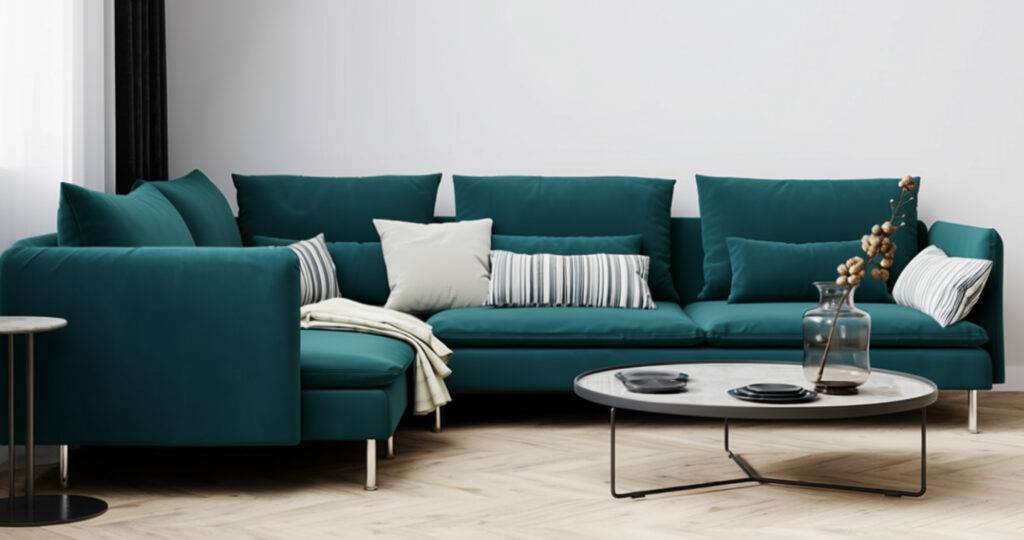
Sprawling L and U-shaped sofas are satisfying a craving for total comfort.
Their sheer size has given rise to clever modular constructions where individual units fit through doors upon delivery and can be moved around at will, adapting to changing needs.
These sectionals work because they acknowledge how we actually use our living rooms. We sprawl. We host. We work from home. We need furniture that adapts.
Brands like Loaf and Swyft have perfected the modular approach. You can reconfigure your sofa as your life changes.
The comfort level is non-negotiable. Deep seats. Supportive backs. Upholstery that feels good against your skin.
People are exhausted by furniture that’s only good for one move before it breaks.
Clients are increasingly interested in repairability and pieces with good joinery that can be refinished in twenty years. The goal in 2026 is to buy something once and never have to replace it again.
This shift is both practical and environmental.
Quality furniture costs more upfront but less over a lifetime.
Look for solid wood construction. Dovetail joints. Natural materials that age beautifully rather than just looking worn.
Makers like Ercol and Another Country design with longevity in mind. Their pieces look better with age.
The question to ask before buying: Will I want to repair this in ten years, or will I want to replace it?
Studies show that integrating plants, natural light, and materials measurably improves wellbeing.
Nature-inspired spaces cut stress by 20% and boost creativity. A 2025 neuropsychological study found that short-term exposure to biophilic indoor spaces reduces activity in the brain’s dorsolateral prefrontal cortex, signifying lower cognitive-emotional overload.
Biophilic design isn’t just about adding a few houseplants.
It’s about creating a fundamental connection to nature within your home.
Maximise natural light. Use materials like wood, stone, and wool. Incorporate water features or natural soundscapes. Bring in plants at different heights and scales.
The impact is tangible. You feel calmer. You sleep better. You think more clearly.
Your home should feel like a refuge from the overstimulation of modern life.
Antique furniture offers an inherently sustainable solution with solid wood construction, enduring design, and a lifespan that already spans generations.
Clients are more and more willing to invest in vintage and antique furniture over modern low-quality options. Older pieces are usually solid wood, made beautifully, and have already lasted 50–100 years.
Buying antique doesn’t mean your home has to look like a museum.
Mix eras. Pair a Victorian chest of drawers with contemporary lighting. Place a Georgian chair at a modern desk.
The character of antique furniture adds depth that new pieces simply can’t match. The patina. The slight imperfections. The sense of history.
You can find quality pieces at local auctions, antique markets, and online platforms like Vinterior and 1stDibs.
The sustainability case is compelling. The aesthetic case is even stronger.
The trends shaping 2026 share a common thread.
They’re moving us away from performative design and towards spaces that genuinely support how we live.
It should reflect your actual taste, accommodate your real needs, and evolve as your life changes.
The pressure to create picture-perfect rooms is lifting. In its place, we’re seeing a return to thoughtfulness, quality, and personal expression.
You don’t need to implement all ten trends. Choose the ones that resonate with how you want to feel in your space.
Start with one room. One change. One piece that makes you feel more at home.
That’s where good design begins.
Across Britain and Europe, the sports people actually play differ significantly from what we’re watching

London just claimed the title of world’s best food destination for 2026 in the TripAdvisor

Are you ready for Valentine’s Day? No judgment if you don’t celebrate it, but for