We talk to the iconic choir, before they recreate Roaring 20s glamour for their new show, The Gay Gatsby.
This Christmas, the capital will be transported back to the Roaring 20s – a time of huge technological advancements and cultural change. Civilisation truly started reaching for the skies, as an age of decadence and excess dawned. This is the backdrop of The Gay Gatsby, an electrifying night inspired by the glamour, glitz and grandeur of this incredible decade 100 years ago.
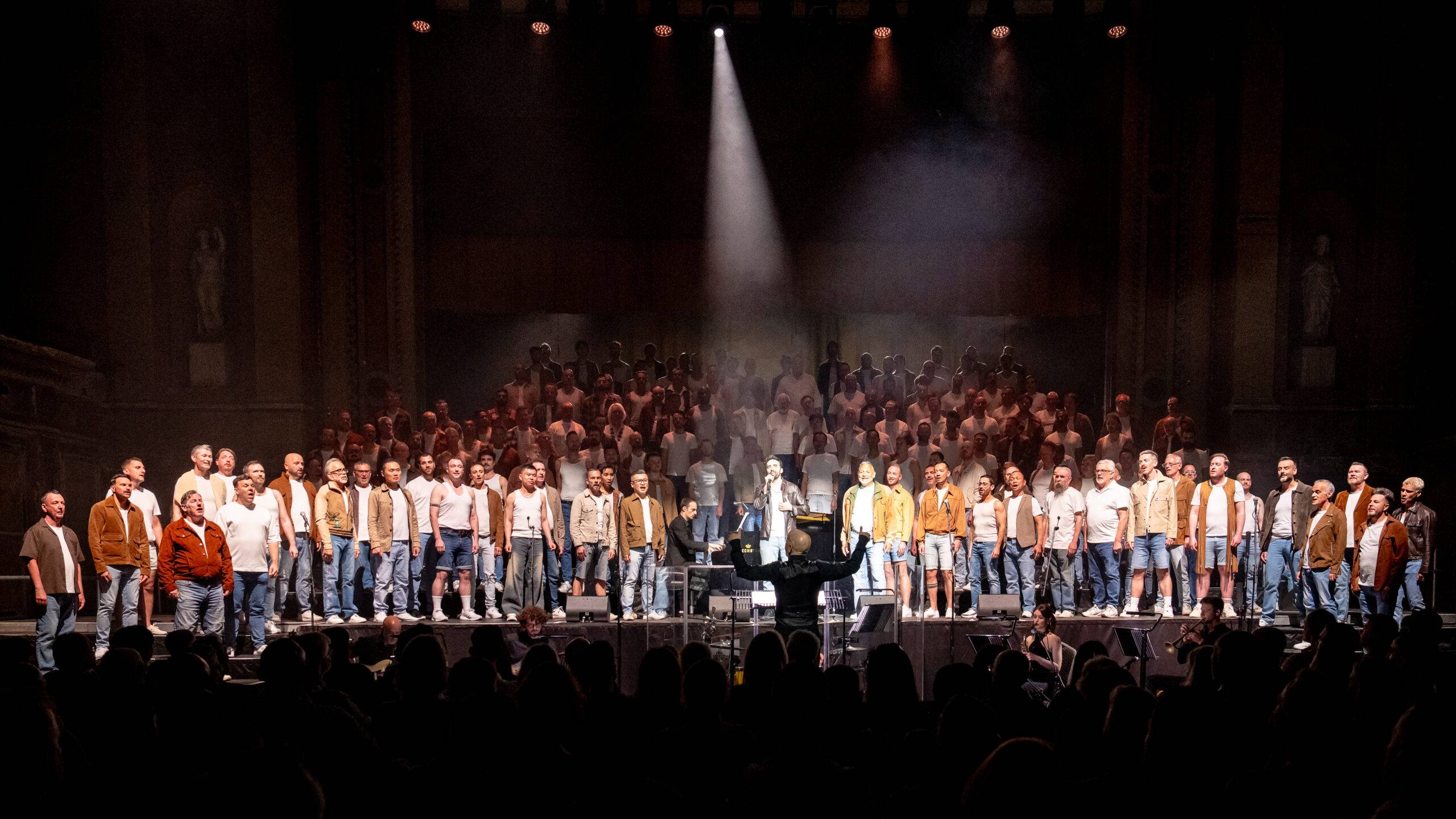
Presented by The London Gay Men’s Chorus at the Troxy in Limehouse on Fri 19 – Sat 20 Dec, this all-singing and dancing production highlights the genius of Jerome Kern and Cole Porter. This postmodern jukebox show gathers some of the finest works to grace musical theatre, including hits from Chicago and The Wild Party. The 200-strong chorus will be joined by dancers, special guests and a live band, all framed in the beautifully renovated art-deco glory of one of London’s finest venues.
The story starts in 1991, when nine friends came together to sing a few Christmas carols at Angel Underground Station, hoping to raise a few pounds for the Terrence Higgins Trust. The men, who belonged to a social group called London Friend, sang together to find a place of support and brotherhood. Little did they know what they had kick-started. Fast-forward 25 years, and this small band of singers has evolved into the London Gay Men’s Chorus – the largest gay choir in Europe.
Across their history, the chorus has worked with a diverse range of artists, including Mark Ronson, Elton John, Lesley Garrett, and Dolly Parton, while regularly selling out shows at venues like the Southbank Centre, Cadogan Hall and the Roundhouse. Built around an ambition to entertain and inspire, while providing a safe, supportive community for gay men, LGMC performs a broad range of music throughout the year.
SALT spoke to LGMC’s Artistic Director Simon Sharp and Chairman Martin Brophy to find out more about The Gay Gatsby and this London institution.
What were your inspirations and influences for The Gay Gatsby show?
Simon – The show takes inspiration from Baz Luhrmann’s Great Gatsby film, which reimagined contemporary music through a 1920s Jazz Age lens. We wanted to explore that same idea on stage — blending authentic songs of the era with modern numbers, given a Gatsby twist. It’s part of our mission to create and connect confident voices across communities, and The Gay Gatsby does that by celebrating queer culture past and present, with joy, fun and a sense of belonging.
It’s been almost a century since Jerome Kern and Cole Porter wrote their finest works, but they still seem so fresh and relevant. Why is that?
Simon – Kern and Porter wrote about themes that are timeless: love, longing, wit, and resilience. Their songs are clever, layered, and often subversive — qualities that still resonate today, especially with LGBTQ+ audiences who recognise the coded humour and daring beneath the surface.
Musically, the melodies are unforgettable and the lyrics sharp. That combination means their work never really dates; it continues to feel immediate, bold, and relatable nearly a hundred years later. That sense of enduring connection speaks to our vision of “everyone brought together through song” — showing how music from a century ago can still unite and uplift audiences in 2025.
Do you stay faithful to the original arrangements, or is there capacity for a little playfulness in your performances?
Simon – We always respect the spirit of the originals, but our arrangements are crafted to showcase a 200+ strong male-voice chorus — which inevitably brings scale, energy, and a different texture.
We work with talented arrangers who aren’t afraid to add sparkle or surprise, whether through harmonies, rhythm, or staging. Playfulness is part of our DNA, but so is musicality, so you get both: high-quality singing with theatrical twists that make it unmistakably LGMC.
Do shows tend to be venue-specific? Is it important to create the right vibe around certain sets of songs?
Simon – It often depends on the show itself. Some productions feel inseparable from a venue — The Gay Gatsby is a perfect fit for Troxy’s art deco grandeur, for example. Other programmes work well in different-sized spaces, depending on the time of year and the scale of performance.
What’s constant is that we design with the audience experience in mind: tailoring repertoire, staging, and atmosphere to create a sense of occasion wherever we perform, whether that’s a world-famous concert hall or a more intimate community stage.
How do you work with other choruses from different countries?
Simon – Collaboration is one of the most rewarding parts of what we do. We’ve sung alongside choruses from across Europe and the US, and most recently reunited on stage with our friends in the Amsterdam Gay Men’s Chorus. Next Summer, we will attend Various Voices in Brussels alongside LGBT+ choruses and choirs from across Europe.
These opportunities are about more than music — they’re cultural exchanges, a way of celebrating solidarity across borders, and a reminder that our voices are stronger together. Shared repertoire, joint concerts, and social connections all help build a global LGBTQ+ choral family.
You seem to be more than a performance choir. Can you tell us more about your activities behind the scenes?
Martin – Our impact stretches far beyond the concert stage. We sing in hospices like Trinity Hospice in Clapham, sing to commemorate events such as the anniversary of the Admiral Duncan bombing in Soho, and bring music to local Prides in places like Thame and Beckenham — as well as marching together at London Pride.
Our Ensemble group also performs at corporate events and private celebrations, helping us share our voice with an even wider community.
But the Chorus is also about what happens off stage. We run peer support groups for members living with HIV, addiction, neurodivergence, or loneliness — recognising that in a city like London, loneliness can be overwhelming, and LGBTQ+ people are often hit harder because of fractured family ties or exclusion. These groups create safe, supportive spaces, while the wider Chorus offers belonging, connection and purpose.
Members also give countless hours as volunteers — from organising rehearsals and tours to running marketing, membership, and fundraising, helping members develop skills and experience beyond the stage.
LGMC is more than a chorus: it’s a community, and for many, has been a lifeline.
Are there ways to become involved with the chorus, even if you don’t have a superb singing voice?
Martin – We’re a non-auditioned chorus — so you don’t need the voice of an angel to be part of what we do. That openness runs through everything: the joy of singing together, the friendships, and the sense of belonging.
It’s not just about who’s on stage, either. Our Gay Gatsby concert actually came through our incubator process, where singing and non-singing members alike can propose show concepts and be part of shaping the Chorus’ artistic voice. Beyond that, our Semitones membership and volunteers support us in production, front of house, marketing, fundraising and more.
At its heart, LGMC is about inclusion — bringing people together through song, whether on stage or in the audience. That’s why our concerts matter so much: they’re not just performances, they’re a chance to feel part of a bigger community, full of joy, humour and heart.
The London Gay Men’s Chorus presents The Gay Gatsby at the Troxy in Limehouse on Fri 19 – Sat 20 Dec 2025. You can find more information about their work and other shows at: www.lgmc.org.uk