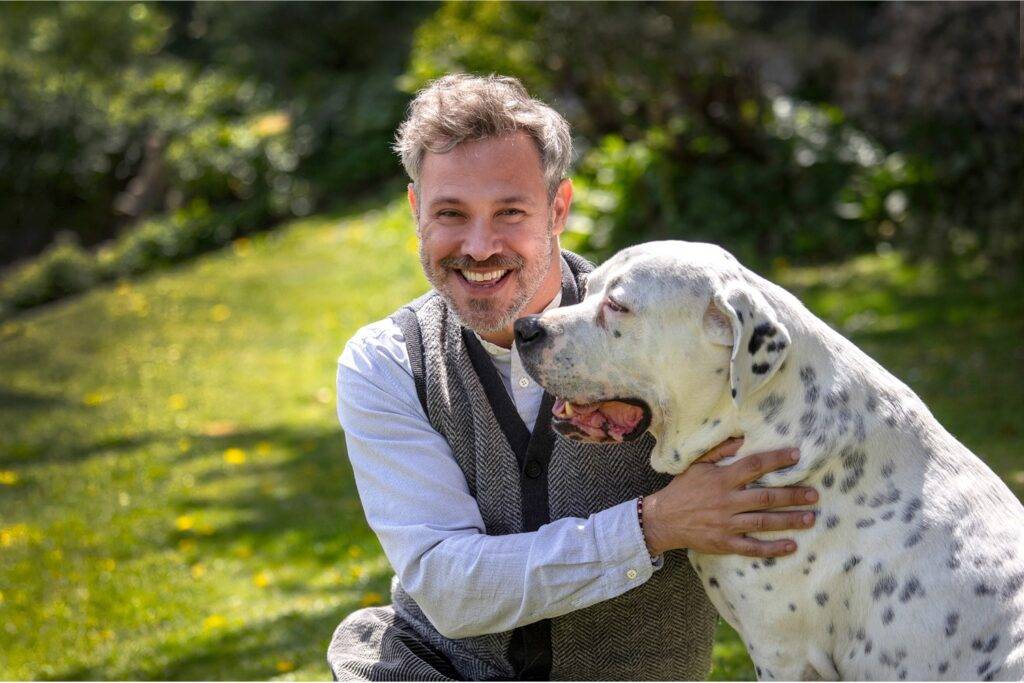
Will Young – Pop Superstar Makes A Difference For Thousands Of Dogs
“The community level is the way to do it. Identify one problem, concentrate on that,

If you’ve felt dragged down by the long winter months, it might be time to treat yourself to a long weekend away. Obviously, big cities like Paris or Barcelona are huge draws for travellers wanting to soak up a bit of culture, but what if you want something a little less obvious but no less charming?
City break bookings increased by almost 25% in the last 12 months, but travellers are shifting away from the obvious choices. Demand is rising for what the industry calls “second cities”. Places like Stuttgart, Glasgow, and Segovia that offer authenticity without the crowds. So let’s take a look at a few options that lie less than three-hours from London (by air, obviously). Could your new favourite city be on the list?
Spring temperatures: 12-18°C
Summer temperatures: 20-26°C
Trenčín wears the crown as European Capital of Culture for 2026, meaning the continent’s eyes are suddenly fixed on this Slovakian gem that has flown under the radar for decades.
A medieval castle dominates the skyline, perched on a limestone cliff above the Váh River. Below, the old town unfolds in a tangle of narrow streets, Renaissance buildings, and squares that fill with locals rather than tour groups.
The castle itself tells Slovakia’s story through Hungarian kings, Ottoman sieges, and Habsburg rule. You’ll find Roman inscriptions carved into the rock, evidence of the city’s strategic importance throughout time.
Walk the covered stairway to the castle for views across red-tiled roofs and distant mountains. The climb takes about 20 minutes, and you’ll pass cafés where locals drink coffee at tables that spill onto cobblestones.
Mid-range hotel option: Hotel Elizabeth sits on the main square with castle views, from £75 per night.
Spring temperatures: 11-19°C
Summer temperatures: 18-28°C
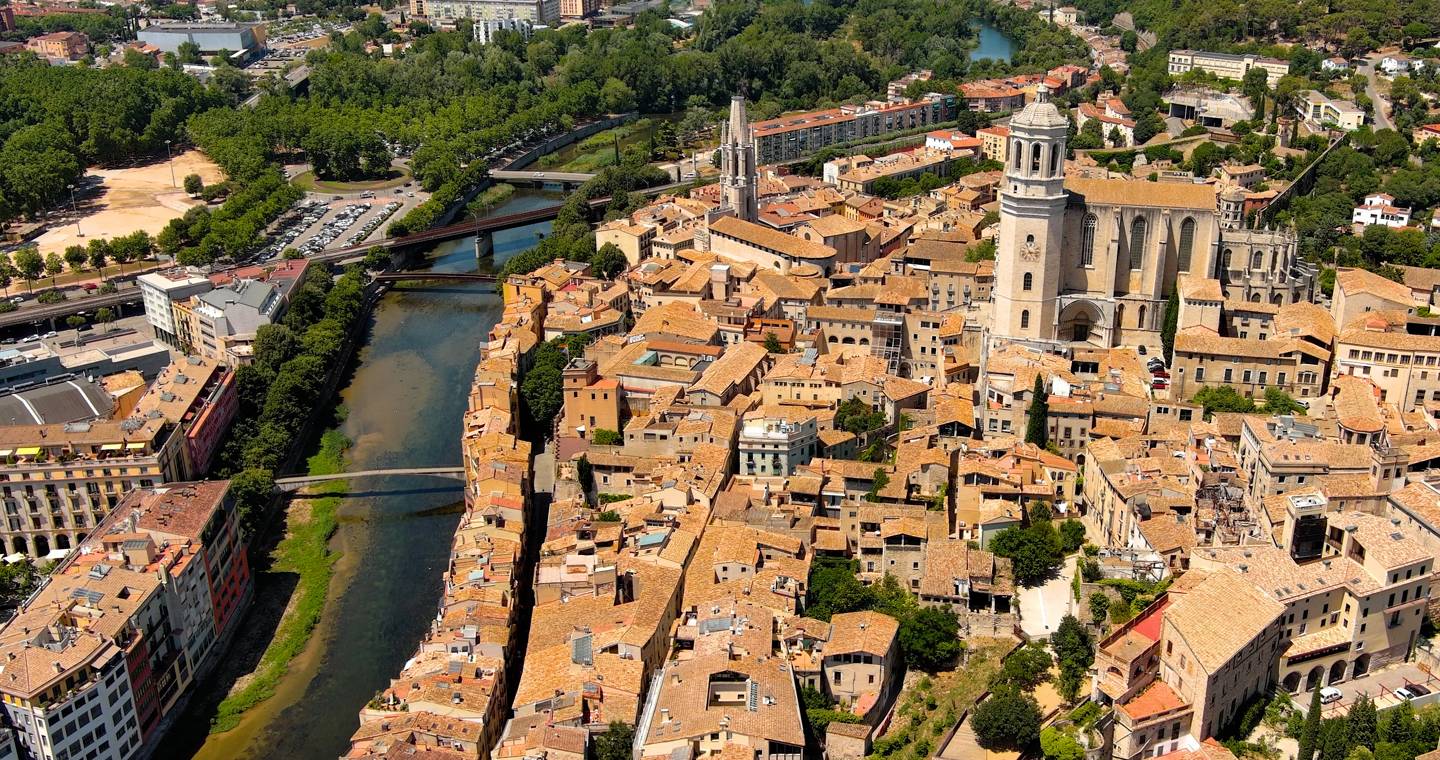
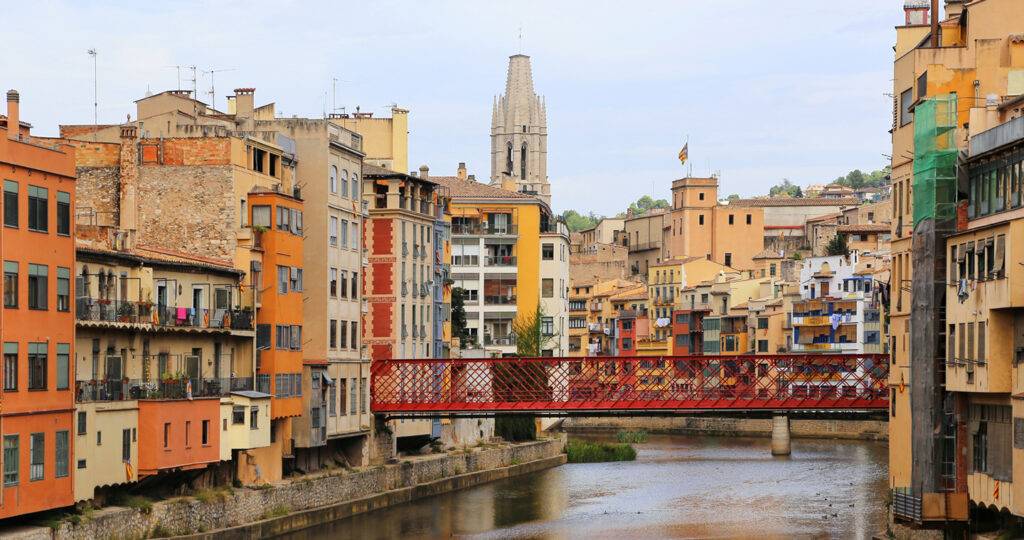
I’ve been reading about Girona as “massively overlooked,” which seemed odd for a city with medieval walls, unique bridges, and a Jewish quarter that predates the Inquisition. Then I visited Barcelona and understood. Everyone goes to Barcelona.
Girona sits 40 minutes north by train, which means you can land at Barcelona’s airport and simply skip the Catalonian capital’s bustle entirely. The Onyar River cuts through the centre, lined with painted houses in ochre, terracotta, and burnt orange that photographers love.
The Call, Girona’s storied Jewish quarter, survived relatively intact. You’ll walk the same stone passages that scholars used in the 12th century when this was one of Europe’s most important Kabbalistic centres.
Walk the medieval walls for a circuit above the city. The path takes about an hour and delivers views across terracotta roofs to the Pyrenees in the distance.
Mid-range hotel option: Nord 1901 occupies a modernist building with original features, from £95 per night.
Spring temperatures: 8-14°C
Summer temperatures: 14-19°C
For small-town Irish charm, Kinsale is hard to beat, according to travel writer Rick Steves’ 2026 European Discoveries. The harbour town sits at the mouth of the Bandon River, where pastel-painted buildings cluster around a natural port that’s sheltered yachts and fishing boats for centuries.
Charles Fort guards the harbour entrance. This star-shaped fortress was constructed by the British in 1682, and eventually taken by the Irish. You can walk the ramparts and look across the water to James Fort on the opposite headland.
Kinsale calls itself Ireland’s gourmet capital, which sounds like marketing until you count the restaurants per capita. Fishy Fishy serves whatever the boats brought in that morning. The Bulman sits right on the water in Summercove.
The Wild Atlantic Way starts here, if you want to drive the coast. Otherwise, walk the Scilly Walk – a coastal path that loops from the town centre past the marina and back through woodland.
Mid-range hotel option: Blindgate House provides boutique rooms in a restored period building, from £130 per night.
Spring temperatures: 14-21°C
Summer temperatures: 21-28°C
Cádiz makes a particularly wonderful discovery. This city plays second fiddle to nobody, occupying a prime spot where the Atlantic meets the Mediterranean.
The Phoenicians founded Cádiz around 1100 BC, which makes it one of Europe’s oldest continuously inhabited cities. Romans, Moors, and Spanish have all left a mark, giving this city its remarkable character.
Walk the seafront promenade where locals take their evening paseo. The cathedral’s golden dome catches the light above whitewashed buildings that seem to glow in the Atlantic sun. Climb the Torre Tavira, the city’s highest point, for 360-degree views and a camera obscura that projects live images of the streets below.
La Caleta beach sits between two castles in the old town. It’s small, sheltered, and popular with families who swim in calm water whilst tourists queue for the big beaches elsewhere.
Mid-range hotel option: Parador de Cádiz overlooks the bay with sea views, from £110 per night.
Spring temperatures: 9-18°C
Summer temperatures: 16-26°C
The canals winding through Annecy’s old town have earned it the “Venice of the Alps” label, though the comparison undersells what makes this place distinctive. The lake sits at the base of mountains that rise sharply to ski resorts and hiking trails.
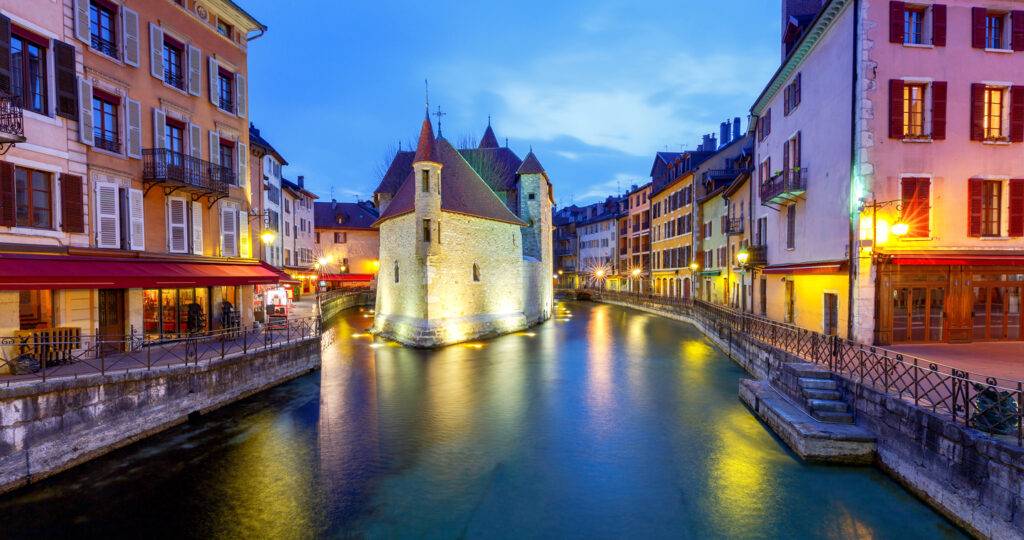
Medieval buildings line the Thiou River, painted in shades that reflect in water so clear you can see the stones below. The Palais de l’Isle, a 12th-century fortress, sits on an island in the middle of the canal like a stone ship that’s been moored there for 800 years.
Lake Annecy claims to be Europe’s cleanest lake, which you can verify by swimming from beaches that locals use throughout the summer. Rent a bike and follow the cycle path that circles the lake. There are 42 kilometres of flat, paved trail through villages and viewpoints.
The mountains around Annecy align with current travel patterns. 71% of UK travellers are considering mountain escapes for summer or autumn 2026, with hotel bookings for rooms with mountain views up 103% compared to last year.
Mid-range hotel option: Splendid Hôtel overlooks the canal in the old town, from £140 per night.
Spring temperatures: 8-15°C
Summer temperatures: 14-22°C
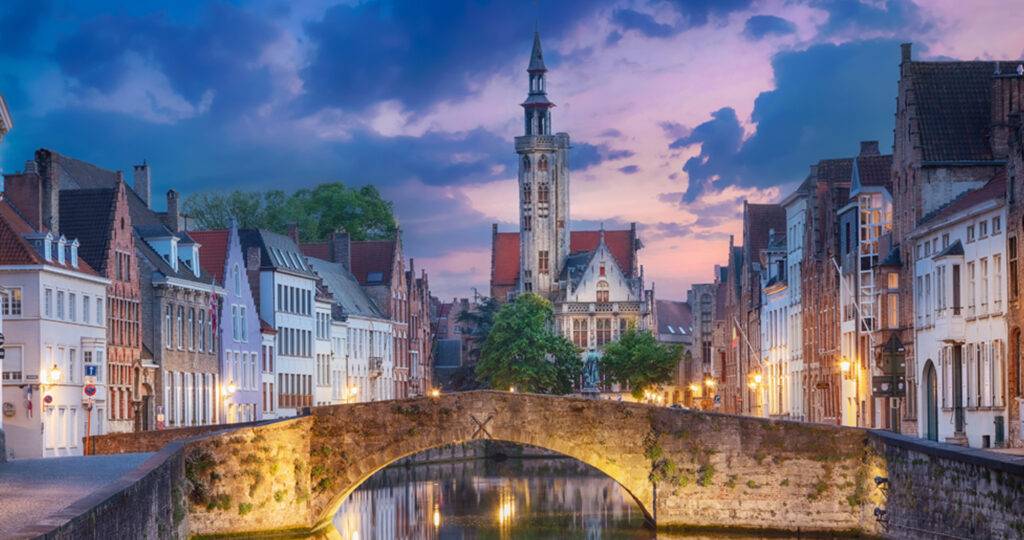
Bruges gets busy during peak season, but the medieval centre remains remarkably intact despite the crowds. Canals loop through a town that looks much as it did when Flemish merchants traded wool and cloth in the 13th century.
The Belfry tower, integral to Martin McDonagh’s crime thriller, In Bruges, rises 83 metres above the Markt. You can climb 366 steps for views across stepped gables and church spires. Below, boats glide along canals past brick buildings that lean slightly with age.
Bruges built its wealth on textiles and trade, which explains the grand guildhalls and merchant houses that line the squares. The Groeningemuseum holds Flemish Primitives, paintings by Jan van Eyck and Hans Memling that were created when this was one of Europe’s richest cities.
Walk away from the Markt to find the Begijnhof, a 13th-century community where religious women lived in whitewashed houses around a peaceful courtyard. It’s still inhabited, though now by Benedictine nuns rather than Beguines.
Mid-range hotel option: Hotel Heritage occupies a 19th-century mansion with canal views, from £165 per night.
Spring temperatures: 11-18°C
Summer temperatures: 17-25°C
San Sebastián curves around La Concha bay in the Basque Country, where the beach forms a perfect crescent between green hills. The city rebuilt itself in belle époque style after a savage fire in 1813, which explains the elegant promenades and ornate buildings that face the sea.
Parte Vieja is the old town, and it seems to pack in more bars per square metre than anywhere you’ve ever seen. Each specialises in pintxos, the Basque version of tapas that involves small portions of food on bread, often held together with cocktail sticks.
San Sebastián also holds more Michelin stars per capita than anywhere except Kyoto. Arzak, Akelarre, and Martin Berasategui all operate here, though you’ll eat well at any bar in the old town if you follow the locals.
Walk or cycle the coastal path to the fishing village of Pasaia. Climb Monte Urgull for views across the bay to Monte Igueldo on the opposite headland. Swim at La Concha when the tide is right. The beach shelves gently and the water stays relatively calm.
Mid-range hotel option: Hotel de Londres y de Inglaterra overlooks La Concha bay, from £180 per night.
Spring temperatures: 9-18°C
Summer temperatures: 16-25°C
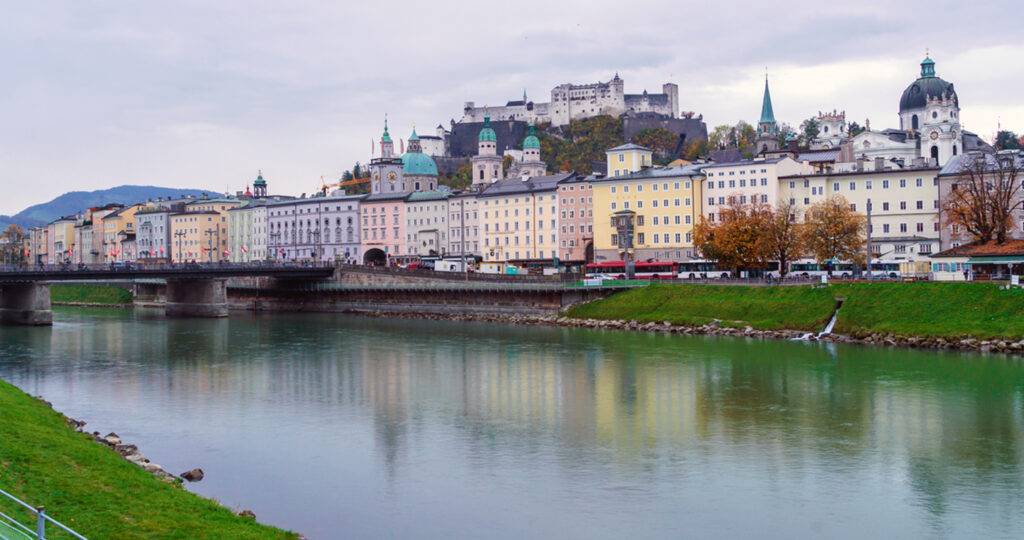
Salzburg sits where the Salzach River cuts through the Alps, dominated by Hohensalzburg Fortress on the hill above. Mozart was born here in 1756, and the city hasn’t let anyone forget that.
The Altstadt unfolds in baroque splendour below the fortress. Throughout this old town, narrow lanes connect squares where fountains play, and cafés spill onto the cobblestones. The cathedral’s dome rises above it all, rebuilt after fire destroyed the original in the 17th century.
Take the funicular to Hohensalzburg and explore one of Europe’s largest medieval castles. The fortress never fell to siege, which explains why it survived intact whilst others across Europe crumbled. Walk the ramparts for views across the city to the mountains beyond.
The Sound of Music tour runs daily if you want to see locations from the film. Which, of course, you will! Or just stroll the Mönchsberg. This wooded hill rises behind the old town, paths and viewpoints gazing down upon the rooftops.
Mid-range hotel option: Altstadt Vienna occupies a historic building in the old town, from £150 per night.
Spring temperatures: 12-19°C
Summer temperatures: 17-25°C
Porto soars above the Douro River, with port wine lodges lining the opposite bank in Vila Nova de Gaia. The Ribeira, the city’s riverside district, pleasantly lures you down to the water in a cascade of coloured buildings, washing lines, and tile-fronted houses.
Six bridges span the Douro, including the Dom Luís I Bridge, a double-deck metal arch designed by a student of Gustave Eiffel. Walk the upper level for unbeatable views across terracotta roofs to the Atlantic.
Port wine cellars offer tours and tastings in Vila Nova de Gaia. Taylor’s, Graham’s, and Sandeman all operate from historic lodges where oak barrels age the fortified wine that made Porto famous.
Love design and architecture? This is a place for you. The Livraria Lello bookshop attracts queues for its art nouveau interior and curved staircase. The São Bento railway station displays azulejo tiles that depict Portuguese history across the entrance hall. Walk the riverside from Ribeira to Foz do Douro, where the river meets the sea.
Mid-range hotel option: Pestana Vintage Porto overlooks the Douro in Ribeira, from £120 per night.
Spring temperatures: 11-20°C
Summer temperatures: 19-30°C
Verona built its wealth on being in a position where trade routes crossed the Adige River. Countless cultures have been through here and all left their mark. Shakespeare even set Romeo and Juliet here. Although the balcony tourists visit today was added in the 20th century.
The Arena di Verona seats 15,000 people in a Roman amphitheatre from the 1st century AD. Opera season runs from June to September, when productions use the ancient stones as a dramatic backdrop.
Piazza delle Erbe occupies the site of the Roman forum, now filled with market stalls and cafés under frescoed buildings. The Torre dei Lamberti rises 84 metres above the square, which you can climb for stunning views across the city to the pre-Alps.
Be sure to see the Ponte Pietra – a Roman bridge that the Germans destroyed in 1945 and the Italians rebuilt using the original stones recovered from the river. The Castel San Pietro sits on the hill above, reached by some intimidating steps… or just take the funicular.
Mid-range hotel option: Veronesi La Torre occupies a medieval tower in the historic centre, from £135 per night.
“The community level is the way to do it. Identify one problem, concentrate on that,

By Stuart Rolt I used to hate magic. OK, that’s a strong word, but anything

London just claimed the title of world’s best food destination for 2026 in the TripAdvisor